---
title: "#9 Turbo Frame Tabs"
author: "Yaroslav Shmarov"
date: "2021-10-26"
canonical_url: "https://blog.superails.com/tabbed-content-with-hotwire-turbo-frames"
markdown_url: "https://blog.superails.com/tabbed-content-with-hotwire-turbo-frames.md"
description: "In the previous post we did tabbed content with turbo streams by replacing a DOM ID with a template served by a POST request."
tags: ["ruby","rails","ruby-on-rails","hotwire","turbo","tabs"]
license: "GNU AGPL v3. Credit Yaroslav Shmarov and link the canonical URL."
---
# #9 Turbo Frame Tabs
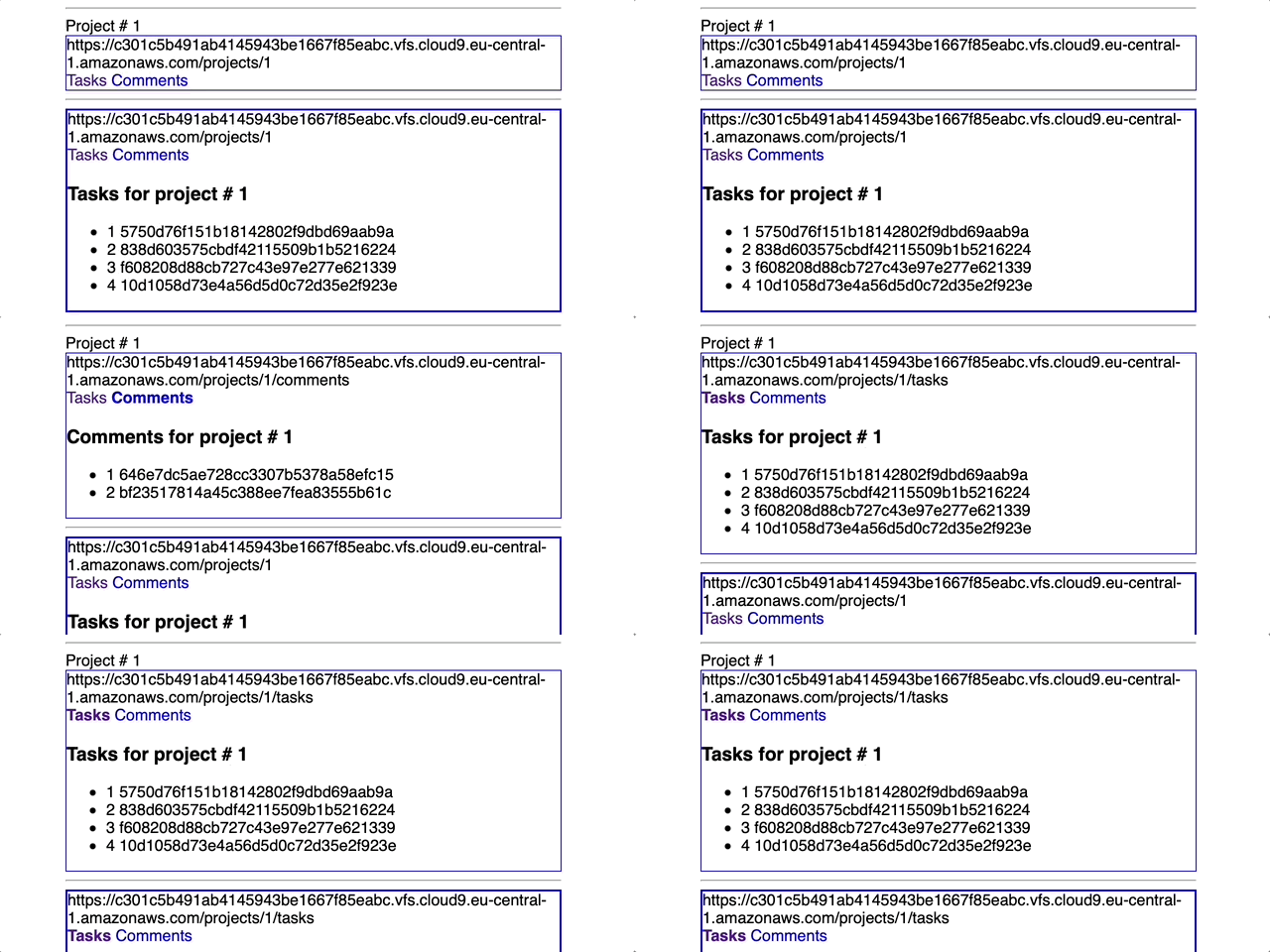
In the previous post we did tabbed content with turbo streams by replacing a DOM ID with a template served by a POST request.
Now we will add tabbed content functionality with turbo frames.
Use the boilerplate functionality from the previous post.
#### 1. Turbo Frames. Separate controller actions for each dropdown.
* for turbo frames, you can use GET routes without any problems.
app/config/routes.rb
```ruby
resources :projects do
member do
get :comments
get :tasks
end
end
```
* respond with html
* you can render either `partial` or `template`. I just prefer partial here. Does not matter much.
* `turbo_frame_request?` - to make this `format.html` available ONLY via turbo request, not as a separate page
* `else redirect` - if someone tries to open a tab in a new tab
[`turbo_frame_request` source code](https://github.com/hotwired/turbo-rails/blob/main/app/controllers/turbo/frames/frame_request.rb#L21){:target="blank"}
app/controllers/projects_controller.rb
```ruby
def comments
if turbo_frame_request?
respond_to do |format|
format.html { render partial: 'projects/comments',
locals: { comments: @project.comments, project: @project }}
end
else
redirect_to @project, alert: "Not allowed"
end
end
def tasks
if turbo_frame_request?
respond_to do |format|
format.html { render partial: 'projects/tasks',
locals: { tasks: @project.tasks, project: @project }}
end
else
redirect_to @project, alert: "Not allowed"
end
end
```
* create a partial with links
* request.url - just for you to see the current url that is being rendered inside the frame ;)
* style - to highlight the current link
app/views/projects/_tabs.html.erb
```ruby
<%= request.url %>
<%= link_to "Tasks", tasks_project_path(@project),
style: "#{"font-weight: bold" if current_page?(tasks_project_path(@project))}" %>
<%= link_to "Comments", comments_project_path(@project),
style: "#{"font-weight: bold" if current_page?(comments_project_path(@project))}" %>
```
* create a turbo frame. give it a name
* render the partial with tabs inside
app/views/projects/show.html.erb
```ruby
<%= turbo_frame_tag 'frame_dropdowns' do %>
<%= render partial: "projects/tabs" %>
<% end %>
```
* wrap content of `tasks` and `comments` into a `turbo_frame_tag`
* don't forget to render the `_tabs` partial
app/views/projects/_tasks.html.erb
```ruby
<%= turbo_frame_tag 'frame_dropdowns' do %>
<%= render partial: 'projects/tabs' %>
Tasks for project #
<%= project.id %>
<% tasks.each do |task| %>
-
<%= task.id %>
<%= task.name %>
<% end %>
<% end %>
```
app/views/projects/_comments.html.erb
```ruby
<%= turbo_frame_tag 'frame_dropdowns' do %>
<%= render partial: 'projects/tabs' %>
Comments for project #
<%= project.id %>
<% comments.each do |comment| %>
-
<%= comment.id %>
<%= comment.name %>
<% end %>
<% end %>
```
#### 2. Default open tab
app/views/projects/show.html.erb
```ruby
<%= turbo_frame_tag 'frame_dropdowns' do %>
<%= render partial: "projects/tasks", locals: { project: @project, tasks: @project.tasks } %>
<% end %>
```
#### 3. Using template variants to respond only with a turbo frame
* use template, not partial
* if request is done by a turbo frame, respond with the template variant for turbo frame. [More about Rails layout variants](https://guides.rubyonrails.org/layouts_and_rendering.html#the-variants-option){:target="blank"}
```ruby
class ProjectsController < ApplicationController
before_action :set_project
before_action :turbo_frame_request_variant
def show
end
def comments
respond_to do |format|
format.html { render template: 'projects/comments',
locals: { comments: @project.comments, project: @project }}
end
end
def tasks
respond_to do |format|
format.html { render template: 'projects/tasks',
locals: { tasks: @project.tasks, project: @project }}
end
end
private
def turbo_frame_request_variant
request.variant = :turbo_frame if turbo_frame_request?
end
def set_project
@project = Project.find(params[:id])
end
end
```
* rename partials to templates, add `+turbo_frame` estention to the templates to respond with them
```diff
-- _comments.html.erb
-- _tasks.html.erb
++ comments.html+turbo_frame.erb
++ tasks.html+turbo_frame.erb
```
* Now, when someoone tries to open a new tab, they will get a `Template is missing` error.
#### Conclusion:
* Rendering tabbed content with turbo frames feels more natural (than with STREAMS)
* Frames use GET request
* Streams use POST, PATCH, UPDATE, DELETE requests
* Streams and Frames can exist independently from each other